
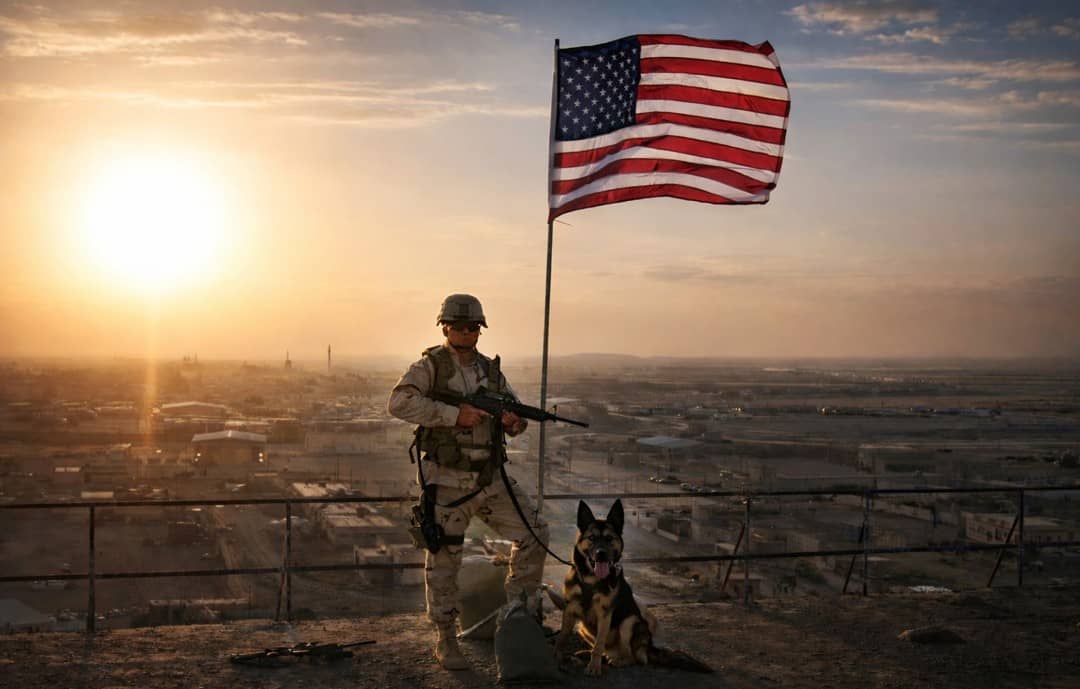
Celebrating National K9 Veterans Day
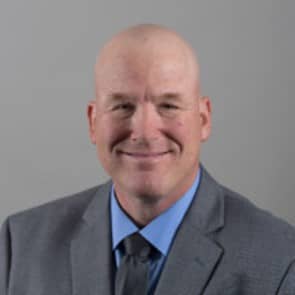
My name is Brent York, and this upcoming National K9 Veterans Day on March 13th holds a special place in my heart. As a former Military Police Working Dog Handler, I had the distinct honor of serving alongside some of the most courageous and dedicated soldiers our military has to offer—our four-legged warriors. Their stories of commitment and sacrifice deserve to be told, and today, I want to share mine.
A Journey into the World of K9
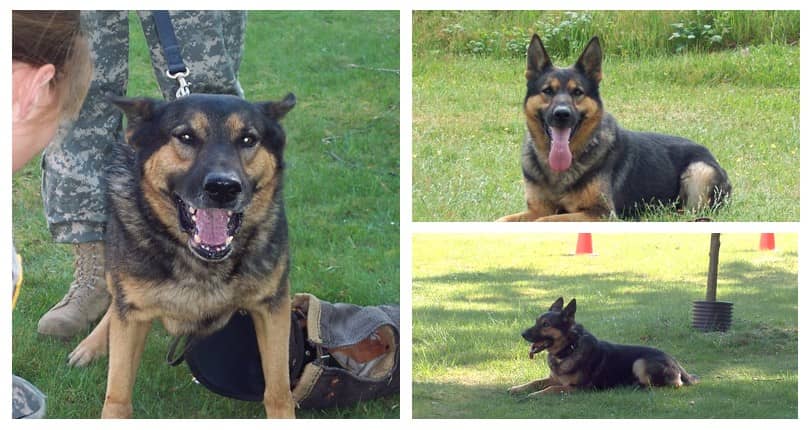
In 1996, I enlisted in the US Army as a Military Police recruit, driven by a dual passion for law enforcement and military service. The path seemed clear, but I couldn't have predicted the profound turn my career would take. In 1998, I was selected to attend the Department of Defense (DOD) Military Working Dog Handlers Course. This was the beginning of a journey that would redefine my understanding of partnership, trust, and service.
Upon graduation, I was assigned to the 6th Area Support Group in Stuttgart, Germany, as a Patrol Narcotics Detector Dog Handler. My new partner was Rex, and together our responsibilities included regular Military Police patrol duties and working the Installation Access Points. We supported unit-sponsored health and welfare checks, a critical component of maintaining order and safety on base.
My career then took me to Pusan, Korea, with the 905th Military Police Detachment. This time, my role shifted to that of a Patrol Explosive Detector Dog Handler. The missions were varied, taking me up and down the peninsula to provide essential patrol and explosive detection support at different installations. Each assignment built upon the last, deepening my experience and respect for the capabilities of these incredible animals.
In 2001, I transitioned to a new role at Lackland AFB as an MWD Trainer with D Co. 701st Military Police Detachment. Here, I had the responsibility of shaping the next generation of MWDs. For 11 weeks at a time, we trained brand new narcotics and explosive dogs for field operations. The curriculum was intense, covering obedience, obstacle course work, patrol duties, and the precise introduction to and response to target odors. A year later, I became a certified MWD Instructor, training future handlers in the same disciplines I had mastered.
A Partnership Forged in Trust: My Time with Cedo
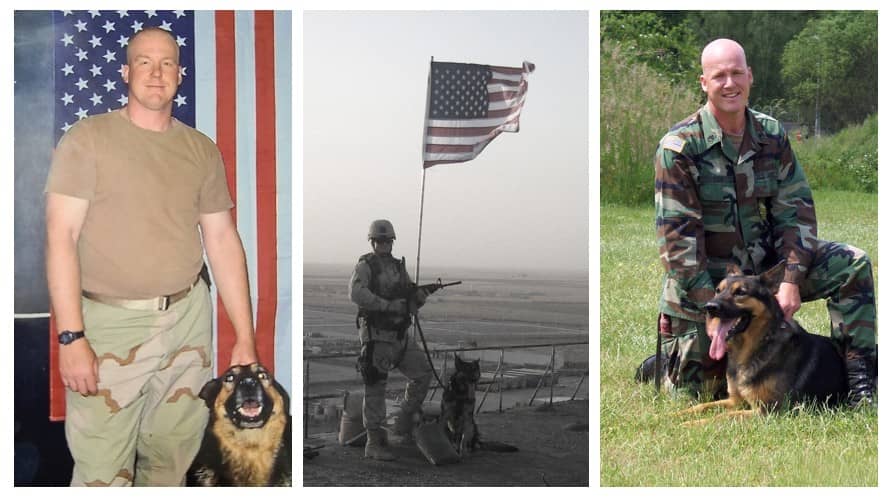
The highlight of my K9 career began in 2004, when I received orders for Hanau, Germany. There, with the 230th Military Police Company, I was assigned to my MWD, Cedo. He was a German Shepherd, highly trained in both patrol and explosive detection. Together, we provided installation security and were often tasked to support other installations throughout Germany. But it was our deployment to Rabiyah, Iraq, in 2006 that cemented a bond I will carry with me forever.
At the Iraq-Syrian border, Cedo and I were tasked with weapons and explosive interdiction. We searched countless vehicles, hunting for explosives being transported by terrorist operatives. In that high-stakes environment, I learned the true meaning of partnership. The trust between a handler and an MWD is the foundation of success, and without it, the team cannot function. It is a two-way street; I depended on him just as much as he depended on me. Cedo was my partner, and he always looked out for me.
This bond doesn't happen overnight. It is cultivated through time and effort, resembling the deep connections within a family. I would guard Cedo with my life, and I knew he would do the same for me. I spent long hours at the kennels, sometimes just sitting in his run with him, talking to him, building that essential rapport. Positive reinforcement was key; every training session was an opportunity to build his confidence with continual praise.
The Rigors of Training and the Importance of Gear
Training was a daily, non-negotiable commitment. It had to be maintained to ensure we were always mission-ready. Our days were structured and demanding. A typical day started around 0600 with PT, and yes, our MWDs joined us. A 3-4 mile run got the blood flowing for both of us. By 0900, we were prepping for training, which would last until approximately 1500. We often focused on detection in the morning and patrol work in the afternoon.
Patrol training included obedience, suspect apprehension, gunfire training, and navigating the obstacle course. In detection, the standards were exacting. I was required to maintain a 95% detection rating for certification. We trained with live aids, including dynamite, C4, and TNT for explosives, and real substances like marijuana and cocaine for narcotics, all highly controlled by the DEA. Detailed training records were essential, not just for certification but for legal purposes as well.
To prepare for any operational environment, we sought varied training opportunities. This included acclimating our MWDs to aircraft. We would routinely join Blackhawk pilots on their training flights to get our dogs used to entering and exiting helicopters, the powerful blade wash, and the movement of the aircraft at different altitudes. This preparation proved invaluable in Iraq, where air travel was a regular part of our movements.
Proper equipment, and its maintenance, was just as crucial as our training. Just as an infantry team performs checks on their weapons and vehicles, an MWD team must PMCS their gear. A handler’s ability to perform depends on the reliability of their equipment. My typical issue consisted of several durable K9 leashes, like a standard 6 ft leash for control and a longer 30 ft one for search patterns. For hands-free situations, a quick-release belt leash is indispensable, allowing the handler to manage other tasks while maintaining control of their partner.
A high-quality K9 harness is another essential piece of gear. It distributes pressure correctly and provides better control during patrol work or when navigating difficult terrain. We were also issued K9 reward toys, such as a jute toy, ball, or a durable Kong, which are vital for positive reinforcement during training. K9 handler kits are also essential tools, specifically designed to provide military teams with mission-ready gear that enhances handler performance while safeguarding canine partners in high-demand operational settings. We were accountable for every piece of K9 equipment, from K9 collars and muzzles to protective K9 paw booties, which protected Cedo’s feet in harsh environments. For our specific bite work training, we used protective suits and arm sleeves to ensure safety.
The MWD: A True Force Multiplier
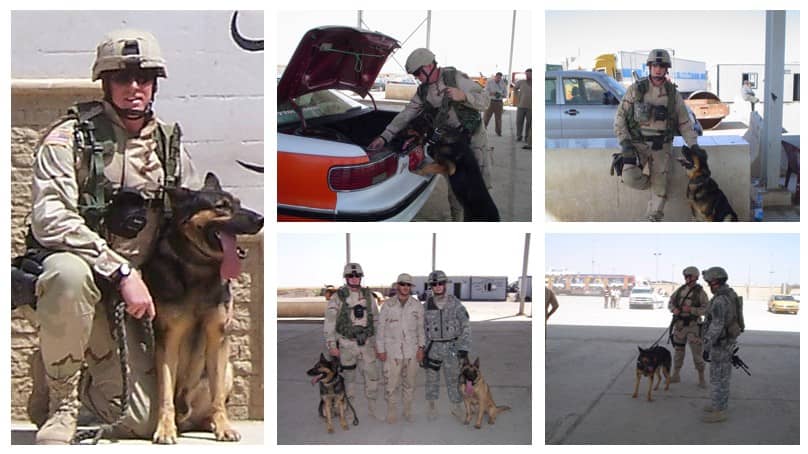
The Military Working Dog team is one of the greatest assets in the US Military. An MWD is a significant force multiplier, whether searching for personnel, narcotics, or explosives. In a combat theater, their value is immeasurable. I recall missions in Iraq where Cedo and I were the third element of an infantry team during raids on high-value targets. We were utilized in weapons cache searches, patrols through villages, and as a general deterrent to nefarious activity.
In a garrison environment, MWDs are just as vital. Narcotic detection teams work tirelessly to prevent drugs from entering an installation, primarily by working the entry gates. They also support unit commanders by conducting health and welfare checks in the barracks, ensuring a safe and disciplined environment for our soldiers.
Upon completing my tour in Iraq, I returned to Germany, where Cedo and I were given the honor of providing explosive detection support for the President of the United States during his visit to Albania in 2007. It was a profound moment and a testament to the trust placed in MWD teams at the highest levels.
A Lasting Legacy
Being an MWD handler changed my entire perspective on service. I was no longer just responsible for myself; I was responsible for the health and well-being of my partner. This bestowed upon me a greater sense of accountability in everything I did. It helped me mature as a Soldier and as a person, sharpening my ability to make critical decisions at a moment's notice.
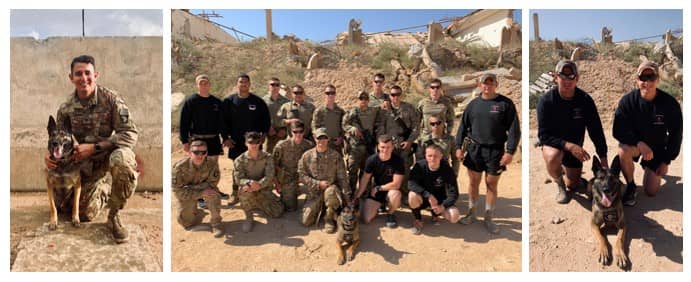
As we approach National K9 Veteran's Day, I reflect on the heroism of these four-legged soldiers. They are true heroes, a vital and necessary component of our military. They deserve the highest level of respect and dignity for their daily contributions. The number of lives they have saved across conflicts, from Vietnam to Iraq and Afghanistan, is simply too great to count. Their stories of commitment and sacrifice are passed from one generation of handlers to the next, ensuring their legacy will never be forgotten.
For those considering entering the K9 world, know that it offers a universe of opportunity and learning. It demands a high level of commitment, time, and understanding. But the life of a K9 handler is exceptionally rewarding, creating bonds and memories that last a lifetime. I was given the privilege of experiencing people, places, and things I never would have outside the world of K9, all thanks to my partner, Cedo (service #E024).
Related Posts
Disclaimer: The information in this blog post is for general informational purposes only and should not be taken as legal, regulatory, safety, or professional advice. Galls, LLC and its affiliates, including US Patriot, LLC, (collectively, the “Company”) distribute public safety and law enforcement products but do not manufacture the items discussed. All product details are based on manufacturer-provided information and have not been independently verified by Galls. We make no warranties regarding the accuracy or completeness of such information. Readers should consult the respective manufacturer or regulatory authority for the latest details.
For more detailed information, visit our Disclaimer Page.
 Item Added to Cart!
