



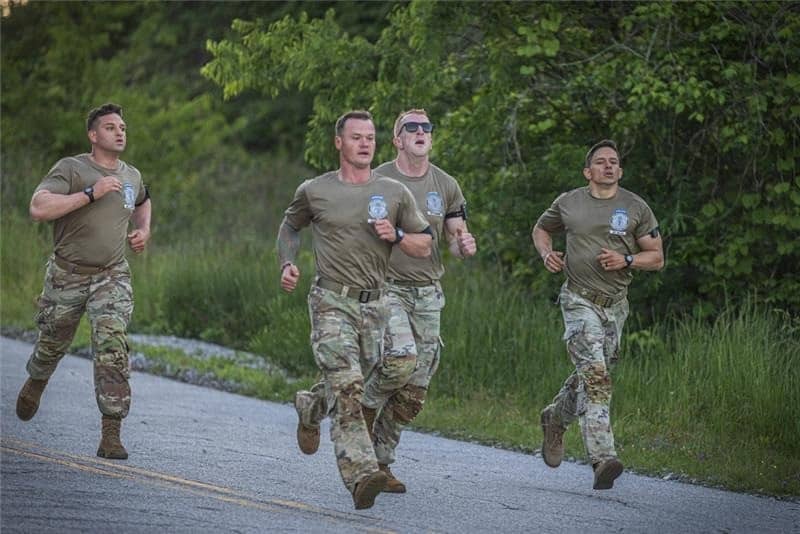
Understanding the Army's New Combat Field Test (CFT): Requirements, Scoring, Preparation, and Recommended Gear
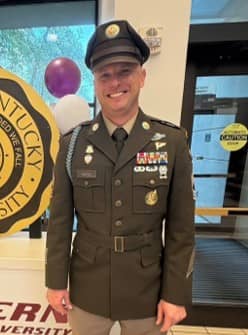
The U.S. Army's Combat Field Test (CFT) is a new annual physical fitness requirement for Soldiers in 24 designated combat military occupational specialties. Implemented in April 2026, the CFT consists of seven continuous events completed in 30 minutes or less while wearing boots, uniform pants, and a coyote brown t-shirt.
Soldiers in combat arms have always been required to do more than most people realize. The job demands carrying heavier loads, pushing through difficult terrain, and continuing to operate when conditions are at their worst. The new Combat Field Test reflects those longstanding expectations by putting them into a standardized, measurable format.
This guide walks through what the CFT is, how it differs from the Army Fitness Test, which MOSs are included, what the diagnostic period means, how to approach training for each event, and what gear choices, especially U.S. Army authorized boots, that can help you train effectively and perform confidently on test day.
What Is the Combat Field Test?
The Combat Field Test is a seven-event physical fitness assessment designed to replicate the physical demands of modern combat. According to the U.S. Army Public Affairs announcement dated April 22, 2026, the CFT is described as "a major update to its physical readiness program designed to align fitness standards with the demanding realities of modern combat."
Critically, the CFT does not replace the Army Fitness Test. Regular Army Soldiers and Reserve Component Soldiers on active-duty orders for 365 days or more must pass both the AFT and the CFT annually. Reserve Component Soldiers in combat specialties not on those orders will alternate between the two tests each calendar year.
The CFT is conducted continuously as a single sequence—no rest between events—and scored on total time. All Soldiers in designated combat roles must meet the same passing criteria regardless of age or sex. That single standard communicates exactly what this test is: a measure of combat capability.
As Sgt. Maj. of the Army Michael Weimer stated: "This isn't just about passing a test; it's a direct measure of our commitment to readiness and ensuring our warfighters can dominate in any environment. We're asking more of our combat arms Soldiers, and this test validates their ability to meet that high standard."
The 7 CFT Events Broken Down
All seven events are conducted in sequence, in uniform—Army Combat Uniform, combat boots, and a brown T-shirt with no cover. The entire test must be completed in 30 minutes or less.
Event 1: One-Mile Run
The test opens with a one-mile run. This establishes your aerobic baseline and sets the pace for everything that follows. Starting too hard will compromise your performance on later events. Train your pacing with boots on—not running shoes. The weight and heel-to-toe drop of a tactical boot changes your gait significantly.
Event 2: 30 Dead-Stop Push-Ups
Immediately following the first run, you perform 30 dead-stop push-ups. Each rep requires a full pause at the bottom—chest touching the ground—before pressing back up. No momentum. No bouncing. Train these exactly as they're tested, because dead-stop mechanics are harder than standard push-up form.
Event 3: 100-Meter Sprint
The 100-meter sprint follows push-ups, meaning your upper body is already fatigued when your legs need to drive hard. This event rewards explosive power and short-duration speed. Sprint intervals and sled work translate directly to this event.
Event 4: 16 Sandbag Lifts
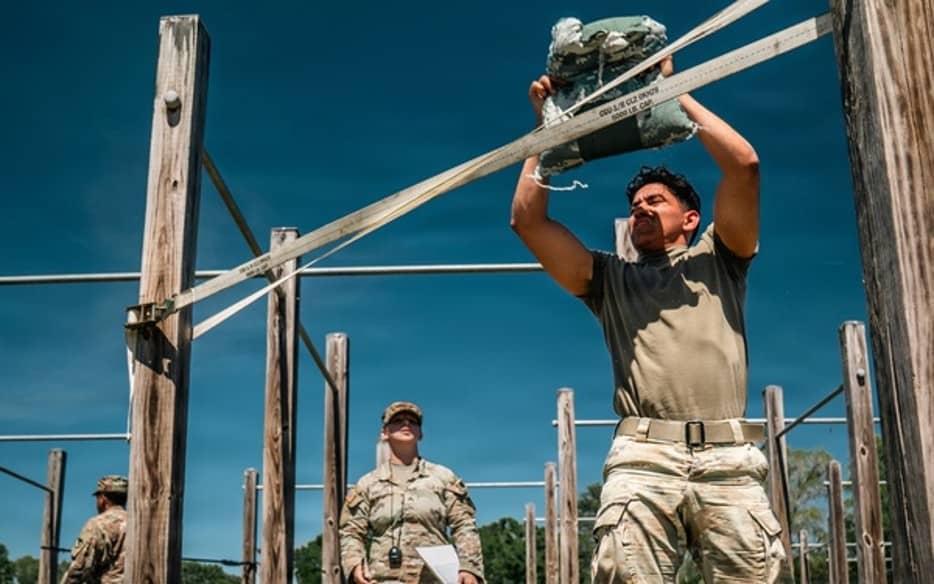
From the sprint, you move to 16 repetitions of lifting a 40-pound sandbag onto a 65-inch platform. This is a loaded, repetitive overhead lift performed with tired arms and legs. Mechanics matter: drive from your hips, not your lower back. Train this with a sandbag—not a barbell—because the shifting weight is part of the demand.
Event 5: 50-Meter Water Can Carry
Two five-gallon Army water cans weighing 40 pounds each. Carry both 50 meters. That's 80 pounds total, offset from your body, pulling on your grip and shoulders. Loaded carries—farmer's carries with kettlebells or dumbbells—are the closest analog available in the gym. Train your grip specifically.
Event 6: 50-Meter Movement Drill
This event combines a 25-meter high crawl with a 25-meter 3-5 second rush. Both movements simulate direct fire contact. The high crawl keeps your body below the line of fire; the rush mimics fire-and-movement. At this point in the test, your heart rate is elevated and your muscles are fatigued. Train these movements in uniform.
Event 7: Final One-Mile Run
The test closes with a second one-mile run. This is where preparation either pays off or falls short. Your legs are carrying accumulated fatigue from six prior events. The Soldiers who pass this event cleanly are the ones who trained their aerobic base and their recovery between bouts of high-intensity work.
How Does the CFT Differ from the AFT?
The Army Fitness Test replaced the Army Combat Fitness Test and applies to all Soldiers across all MOSs. The CFT is combat-specific—designed exclusively for Soldiers assigned to the 24 designated combat MOSs.
The CFT's time-based, single-standard scoring model directly reflects combat logic: the enemy does not adjust its standards for your age or gender.
Which 24 MOSs Are Required To Take the CFT?
According to the U.S. Army Fitness Test website, the following 24 combat military occupational specialties are subject to the CFT standard:
- 11A—Infantry Officer
- 11B—Infantryman
- 11C—Indirect Fire Infantryman
- 11Z—Infantry Senior Sergeant
- 12A—Engineer Officer
- 12B—Combat Engineer
- 12D—Diver
- 13A—Field Artillery Officer
- 13F—Joint Fire Support Specialist
- 18A—Special Forces Officer
- 180A—Special Forces Warrant Officer
- 18B—Special Forces Weapons Sergeant
- 18C—Special Forces Engineer Sergeant
- 18D—Special Forces Medical Sergeant
- 18E—Special Forces Communications Sergeant
- 18F—Special Forces Intelligence Sergeant
- 18Z—Special Forces Operations Sergeant
- 19A—Armor Officer
- 19C—Bradley Crewmember
- 19D—Cavalry Scout
- 19K—Armor Crewmember
- 19Z—Armor Senior Sergeant
- 89D—Explosive Ordnance Disposal (EOD) Specialist
- 89E—EOD Officer
If your MOS is on this list, the CFT is not optional. It is an annual requirement.
What the Diagnostic Period Means for You
The Army has built a 365-day diagnostic period into the initial CFT rollout. During this window, no adverse administrative actions will result from failing the test. This isn't a grace period to coast through—it's a practical acknowledgment that units need time to integrate CFT-specific training into their physical readiness programs.
What the diagnostic period does offer is choice. Soldiers who determine they cannot meet the standard may voluntarily request reclassification to a non-combat MOS. This option was built in deliberately—the Army would rather retain talent in a different role than lose a Soldier entirely.
Use this period to honestly assess your performance against the 30-minute standard. Identify your weakest events. Adjust your training now, while the diagnostic window is open.
How to Train for the CFT: Event-by-Event Preparation
Training for the CFT requires a program that builds aerobic endurance, muscular strength, and performance under cumulative fatigue. These five principles will guide effective preparation:
1. Train in uniform. Every movement in the CFT is performed in ACUs and combat boots. If your training base is built exclusively in running shoes and PT shorts, you are not training for the test you will take. Rotate in boot runs and boot-weight movements at least twice per week.
2. Sequence your training to simulate the test. Run one mile, perform push-ups, sprint, lift, carry, crawl, rush, and run again—in that order. Once per week, execute the full sequence at training intensity. This teaches your body what cumulative fatigue actually feels like and conditions your pacing decisions for test day.
3. Build grip and carry strength specifically. The water can carry exposes grip endurance that standard gym training often neglects. Farmer's carries, dead hangs, and towel pull-ups will close that gap. GORUCK Sand Kettlebells are great for at-home training or on the go.
4. Train dead-stop push-up mechanics. Unlike standard push-ups, each repetition requires a complete pause at the bottom, eliminating momentum and increasing the difficulty of every rep. If your training consists only of traditional push-ups, you'll likely notice a significant difference when performing the movement under test conditions. To better simulate military training demands and increase resistance, consider incorporating a weighted vest such as the 5.11 TacTec Trainer Weight Vest into your workouts.
5. Use Holistic Health and Fitness (H2F) resources. The Army has committed to supporting CFT preparation through command-led physical training programs and H2F resources.
Gear That Makes a Difference: Boot Recommendations for the CFT
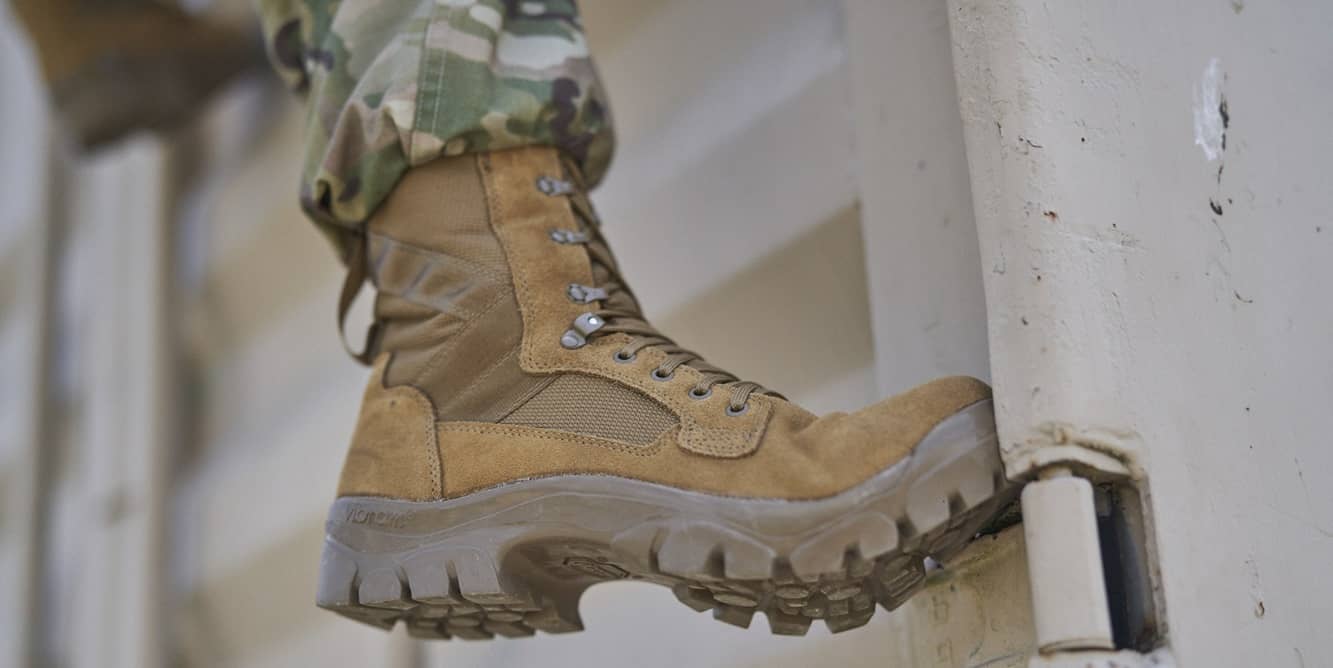
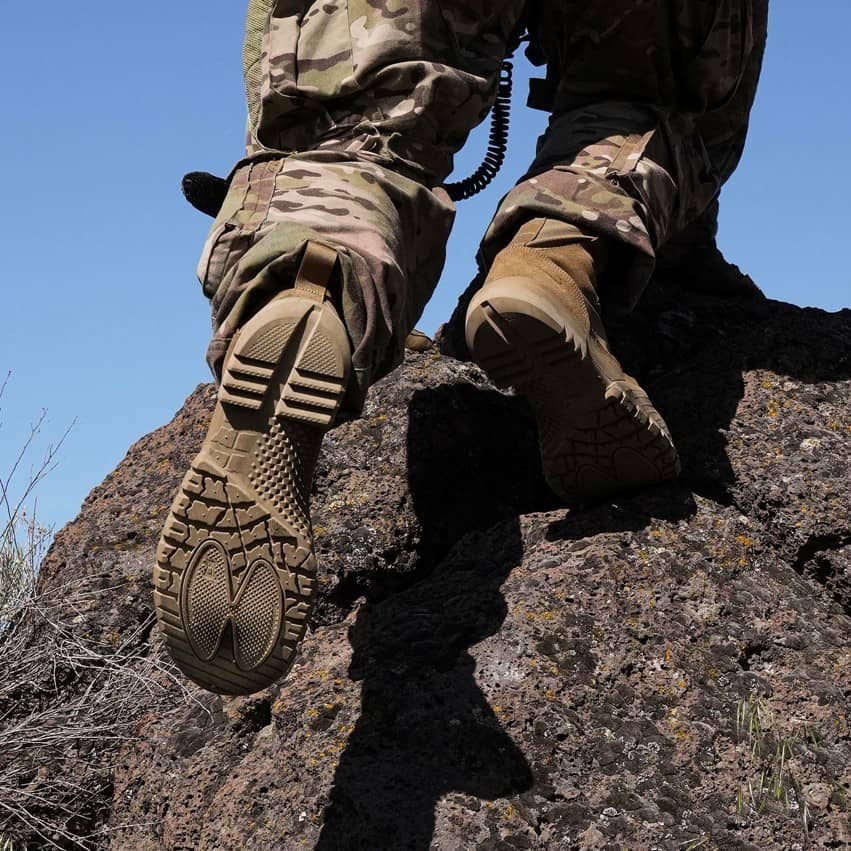
Your boots are the only piece of gear the CFT uniform requires that your unit won't issue to you. The test demands a boot that performs across two runs, sprinting, crawling, and rushing—all within a 30-minute window. Weight, ankle support, and traction are not abstract concerns here; they directly affect your time.
The following boots are available through U.S. Patriot and are well-suited to the physical demands of the CFT.
OTB M-Carbon 8 Boots
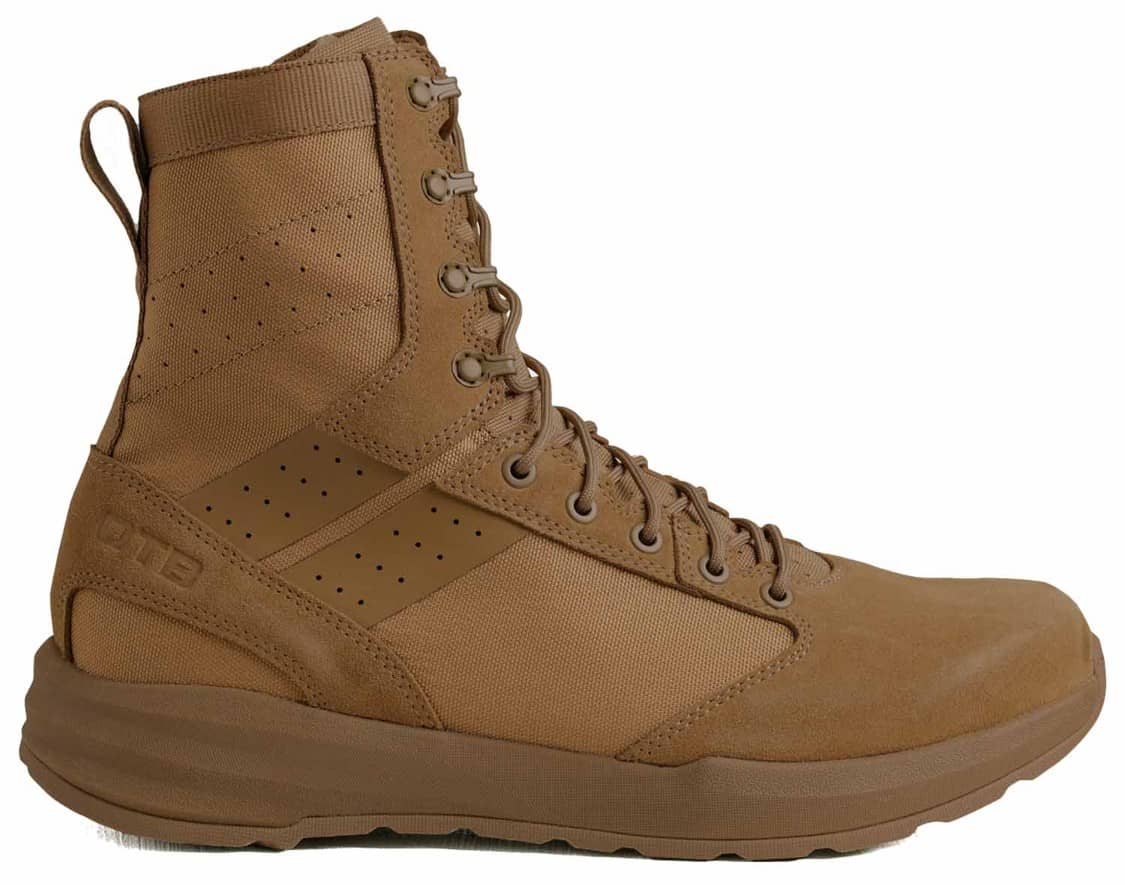
The OTB (Outside The Box) M-Carbon 8 is engineered for speed and agility without sacrificing protection. Its carbon fiber arch shank provides structural support during loaded carries and sandbag lifts while keeping weight low—a critical advantage across two one-mile runs and a 100-meter sprint. The upper construction combines ballistic nylon with leather reinforcements, offering durability through high-wear movement patterns like the high crawl. For Soldiers who prioritize lightweight performance in a high-intensity test format, the M-Carbon 8 is a proven option.
Garmont T8 NFS 670 Tactical Boots
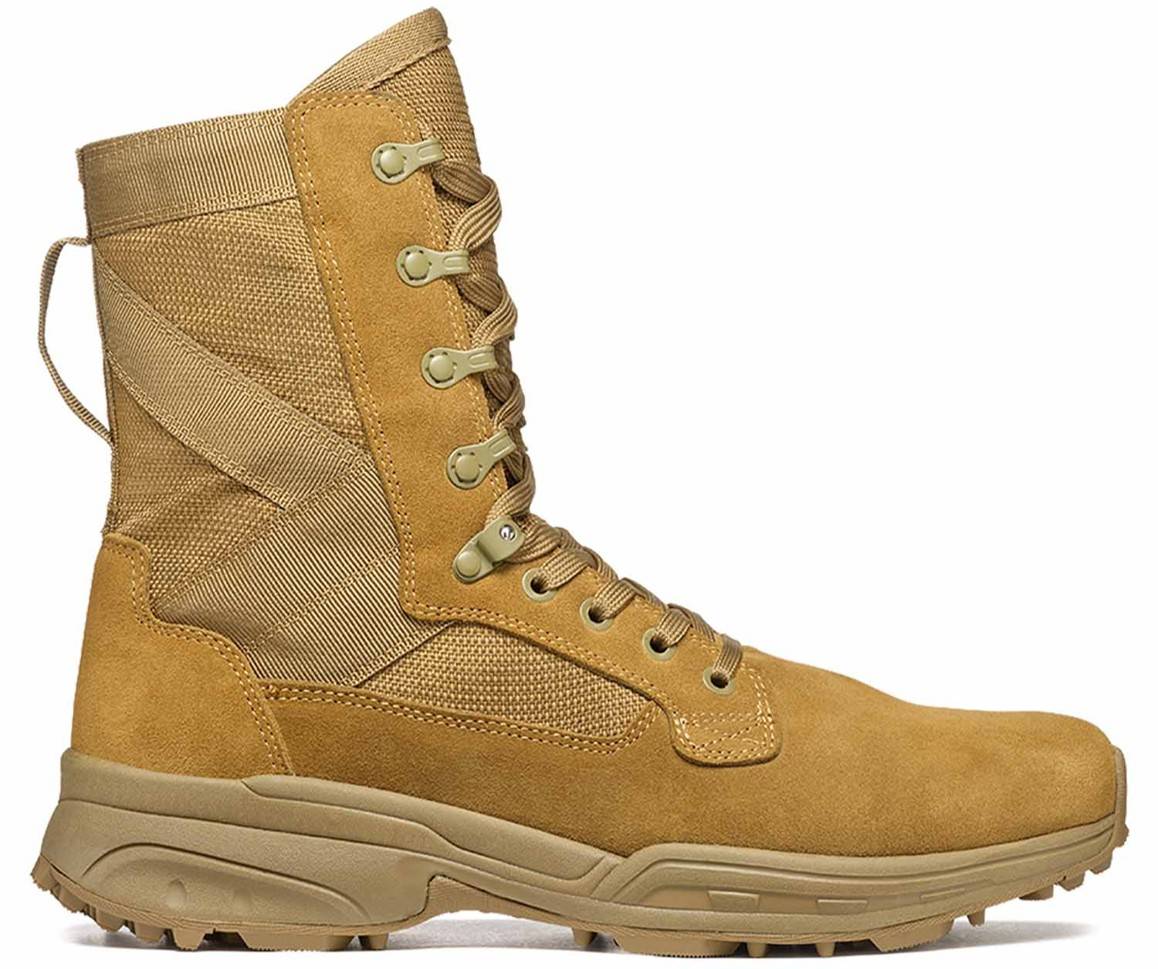
The Garmont T8 NFS 670 is a well-established platform in the special operations community, and its design translates directly to CFT performance. "NFS" stands for No FOD System—a lacing configuration that eliminates foreign object debris risk on flight decks, but the real-world benefit for ground Soldiers is a low-profile, secure fit that doesn't shift under load. The boot's Vibram outsole provides reliable multi-surface traction through crawling and rushing movements. Cushioning is firm enough to support running efficiency, while the ankle cuff delivers support during lateral movements and heavy lifts.
Oakley SI Light Assault 3 Boots
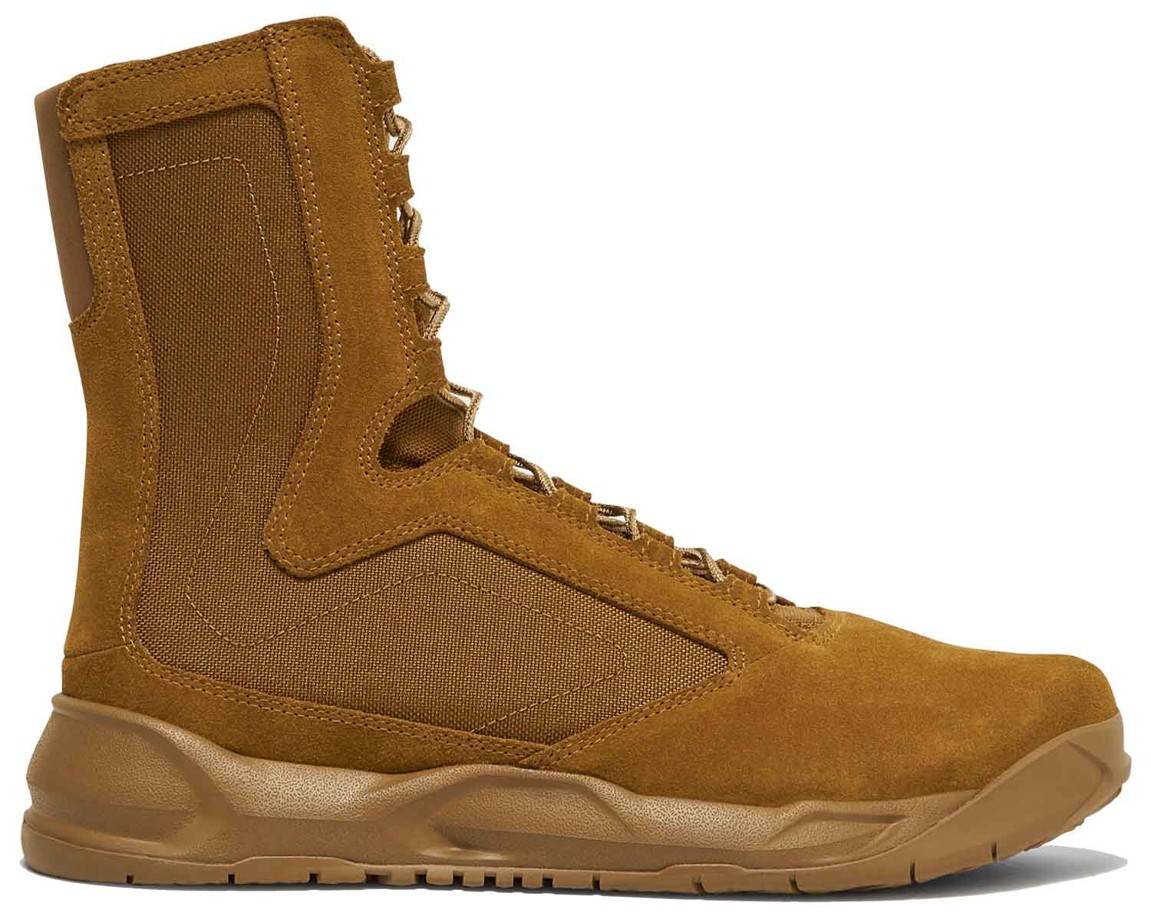
Oakley's SI (Standard Issue) line was built around the needs of military and law enforcement operators, and the Light Assault 3 reflects that directly. At approximately 13 ounces per boot, it sits near the lower end of the tactical boot weight spectrum—a meaningful advantage when you're running two miles plus sprinting within a single test. The boot features a breathable nylon mesh upper with synthetic leather overlays, keeping heat buildup manageable during sustained aerobic events. Traction is provided by a multi-directional lug pattern suited to both packed surfaces and soft terrain. Soldiers who have tested this boot in extended training consistently note reduced foot fatigue across high-repetition movement.
Nike SFB B2 Boots
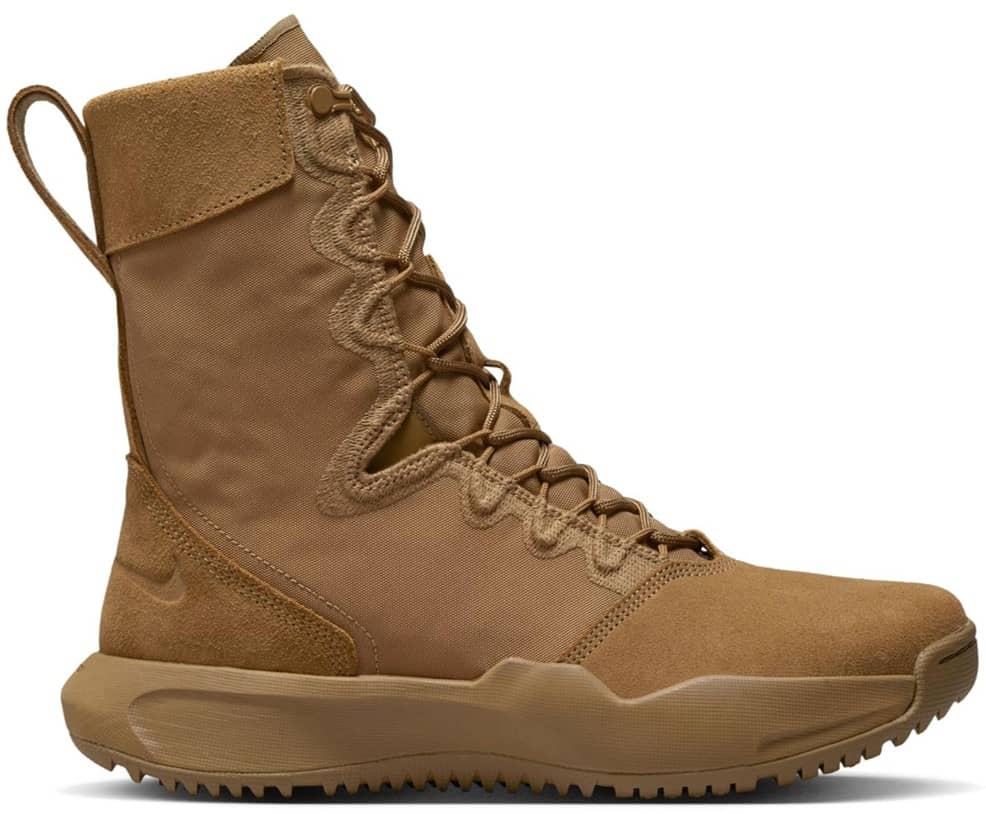
The Nike SFB (Special Field Boot) line has been widely adopted across the force since its introduction, and the SFB B2 iteration refines the original's strengths: low weight, a running-shoe-like midsole geometry, and a flexible upper that allows natural foot movement during sprinting and crawling. The SFB B2 uses a full-length Phylon foam midsole that absorbs impact during runs while providing enough stability for loaded carry events. Its canvas and leather upper is AR 670-1 compliant, making it a practical, everyday-wear option that doubles as a legitimate CFT platform. For Soldiers already wearing this boot in garrison or deployed environments, transitioning to it for CFT training requires no adaptation period.
Under Armour Men's Charged Loadout Boots
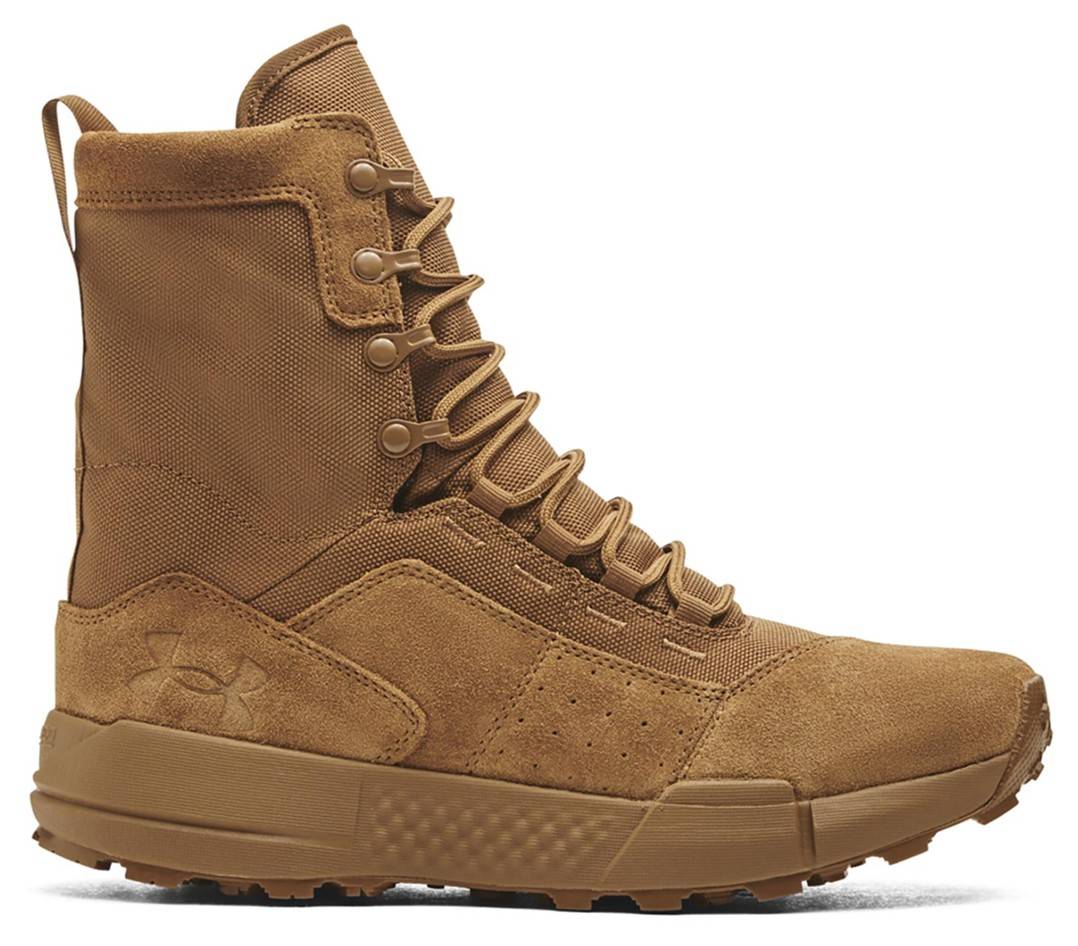
Under Armour's Charged Loadout brings the brand's Charged Cushioning midsole technology into a tactical boot format. That midsole, which compresses and returns energy with each footfall, is borrowed directly from UA's performance running line. For Soldiers logging significant boot mileage in CFT preparation—multiple runs per week with occasional full-sequence training—the energy return properties can reduce leg fatigue across training blocks. The boot is lightweight for its class, with a textile upper that provides breathability and a rubber outsole engineered for grip on hard and soft surfaces alike.
Nike SFB Air Field Ukiah 8" Leather Boot
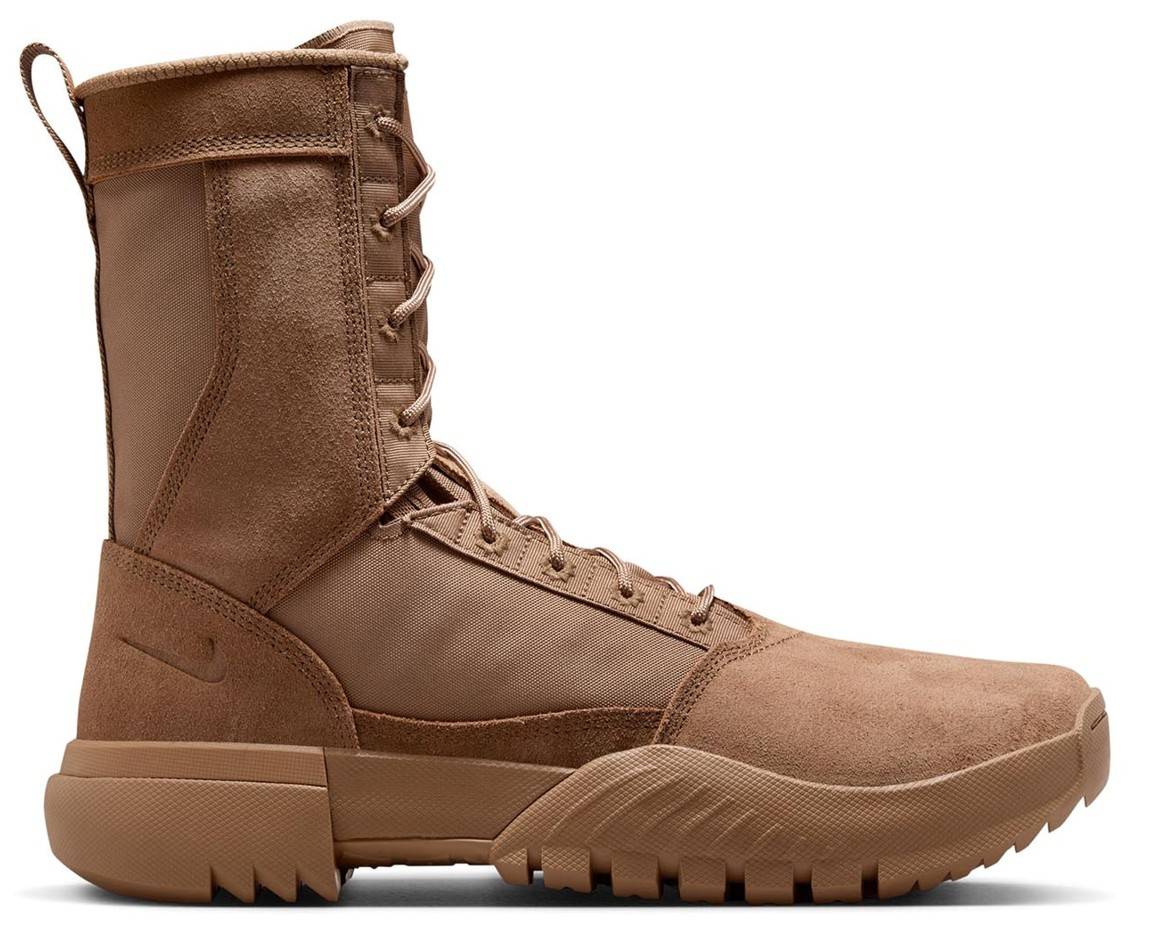
The 8-inch Ukiah variant of the SFB Air Field line adds ankle coverage and leather construction for Soldiers who prefer the structure of a higher boot during loaded events. The integrated Air-Sole unit in the heel addresses impact management during the final one-mile run, when leg fatigue is at its peak. Full-grain leather provides durability through abrasive movements—specifically the high crawl—while maintaining a break-in period that is shorter than traditional leather boots. For Soldiers who find low-cut boots insufficiently supportive under load, the Ukiah offers a middle ground between tactical stiffness and performance flexibility.
Danner Tachyon Boot
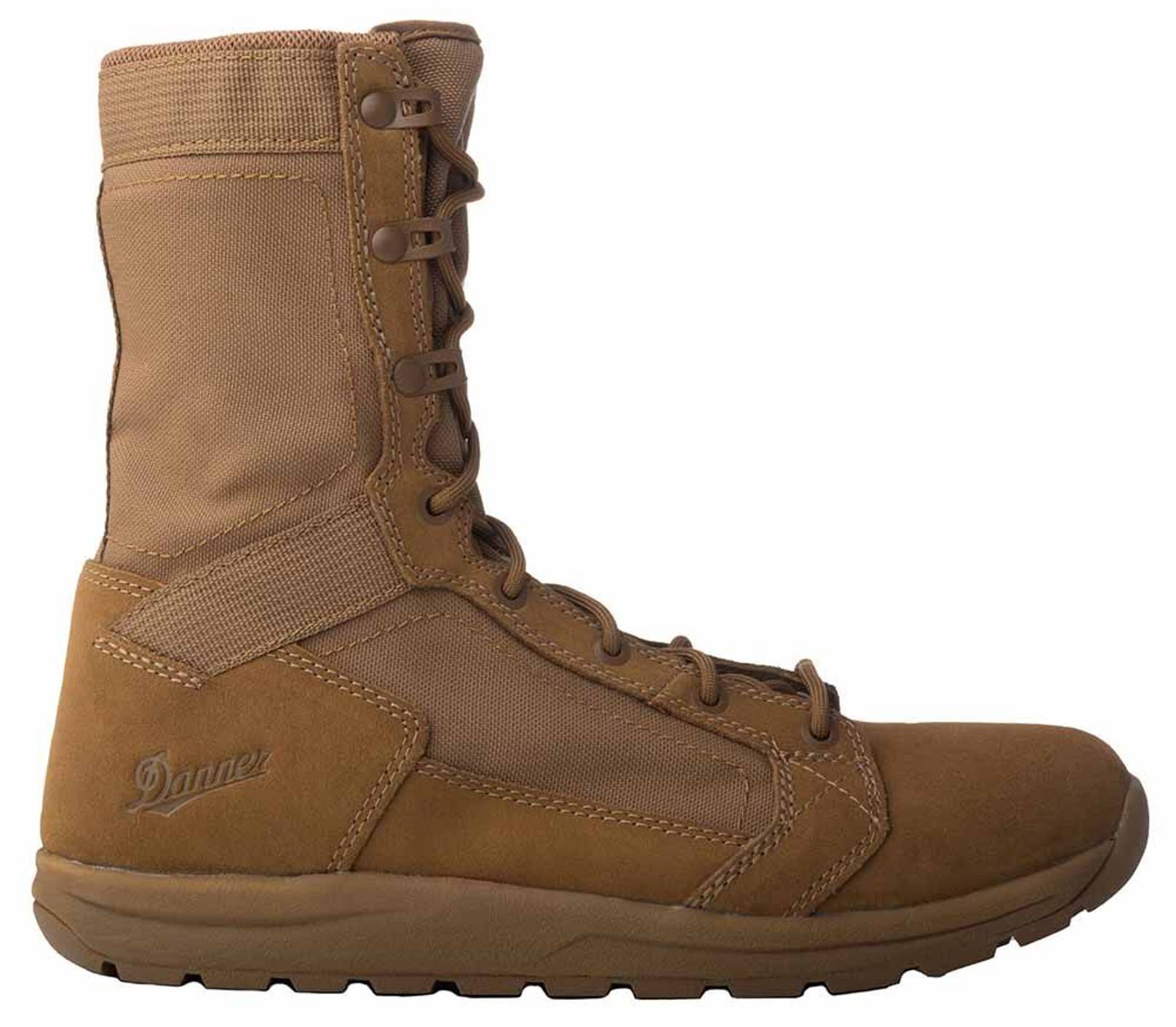
Danner's Tachyon is one of the lightest full-featured tactical boots currently available, built on a design framework borrowed from trail running shoes. The Danner Tachyon uses a single-piece textile upper with minimal seaming, which reduces friction points during extended wear and crawling movements. Its outsole is a multi-lug rubber compound that performs on both hard pack and loose terrain. For Soldiers who find traditional tactical boots prohibitively heavy for sustained aerobic work, the Tachyon represents a field-proven ultralight option that still meets the durability demands of the CFT uniform standard.
Merrell Men's MQC Strike Tactical Boots
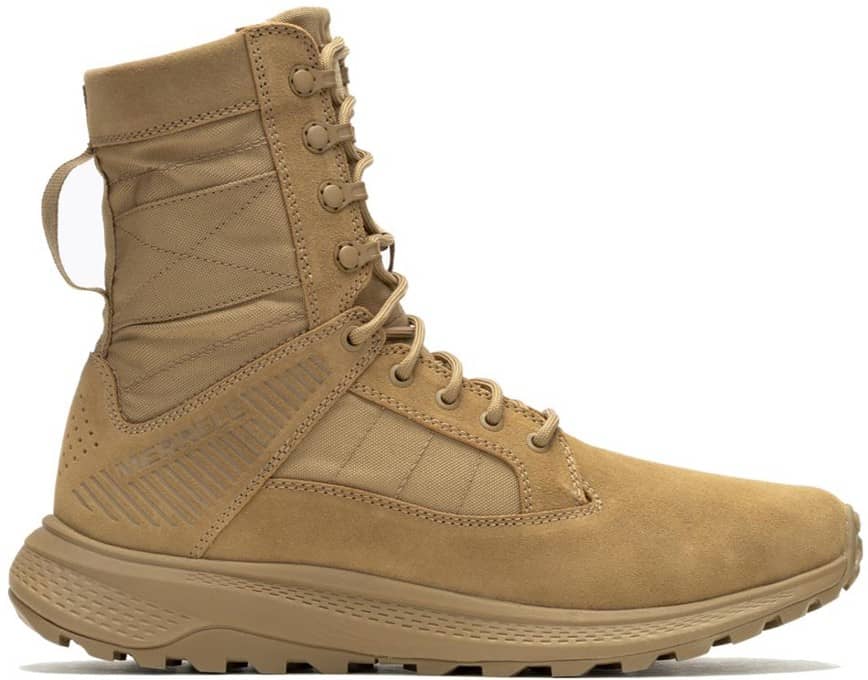
Merrell built the MQC Strike on its established trail footwear technology platform, integrating a Vibram TC5+ outsole—one of the more recognized traction compounds in outdoor and tactical applications—into a low-profile, AR 670-1-compliant boot. The EVA cushioning system runs full-length, providing consistent impact absorption across all running events. For Soldiers who train in varied terrain and need a boot that performs reliably on both paved surfaces and field environments, the MQC Strike offers an adaptable solution. Its suede and mesh upper construction prioritizes breathability, which matters over the course of a 30-minute continuous event sequence.
Embrace the Standard
The Combat Field Test is not designed to punish combat arms Soldiers. It's designed to validate what the best of them already do. The standard—30 minutes, single threshold, same for everyone in those 24 MOSs—reflects what physical readiness actually means in a combat context.
Use the diagnostic period wisely. Train the sequence. Get your feet in the right boots. Know your weakest event and address it before the diagnostic window closes.
U.S. Patriot carries the full range of tactical boots referenced in this guide, along with the uniforms, duty gear, and equipment that combat soldiers rely on.
FAQs About the Army CFT
When did the Army Combat Field Test go into effect?
The Army Combat Field Test implementation began in April 2026, as announced by U.S. Army Public Affairs on April 22, 2026. The CFT is now an annual requirement for active-duty Soldiers serving in 24 designated combat military occupational specialties. Adverse actions will start to take effect after the diagnostic time period.
Does the CFT replace the Army Fitness Test?
No. The CFT does not replace the Army Fitness Test. Regular Army Soldiers and Reserve Component Soldiers on active-duty orders for 365 days or more must pass both the AFT and the CFT annually. Reserve Component Soldiers in combat specialties not meeting that threshold will alternate between the two tests each calendar year.
What is the passing standard for the Army CFT?
All seven events must be completed in 30 minutes or less. The CFT applies a single standard to all Soldiers in designated combat MOSs, regardless of age or sex. Soldiers must wear the Army Combat Uniform, combat boots, and a brown T-shirt with no cover.
What happens if you fail the CFT during the diagnostic period?
During the initial 365-day diagnostic period, no adverse administrative actions will be taken against Soldiers who fail the CFT. This diagnostic phase allows time for training adaptation and unit-level program integration. Soldiers who determine they cannot meet the standard during this period may voluntarily request reclassification to a non-combat MOS.
Can Soldiers in non-combat MOSs be required to take the CFT?
No. As of April 2026, the CFT applies only to Soldiers serving in the 24 designated combat military occupational specialties identified by the Army. Soldiers in non-combat MOSs take the Army Fitness Test exclusively.
What boots are approved for the Army CFT?
The CFT uniform requirement specifies combat boots—AR 670-1-compliant tactical boots. There is no single approved boot model. Soldiers should prioritize boots that balance weight, ankle support, and traction across running, sprinting, crawling, and loaded carry movements. Options such as the Nike SFB B2, Garmont T8 NFS 670, Danner Tachyon, and Oakley SI Light Assault 3 are all widely used in combat arms environments and meet uniform standards.
Where can I find more information about the Army CFT?
The Army maintains a dedicated CFT resource page, which includes event standards, applicable MOSs, and additional guidance for Soldiers and commands preparing for the test.
Related Posts
Disclaimer: The information in this blog post is for general informational purposes only and should not be taken as legal, regulatory, safety, or professional advice. Galls, LLC and its affiliates, including US Patriot, LLC, (collectively, the “Company”) distribute public safety and law enforcement products but do not manufacture the items discussed. All product details are based on manufacturer-provided information and have not been independently verified by Galls. We make no warranties regarding the accuracy or completeness of such information. Readers should consult the respective manufacturer or regulatory authority for the latest details.
For more detailed information, visit our Disclaimer Page.
 Item Added to Cart!
